
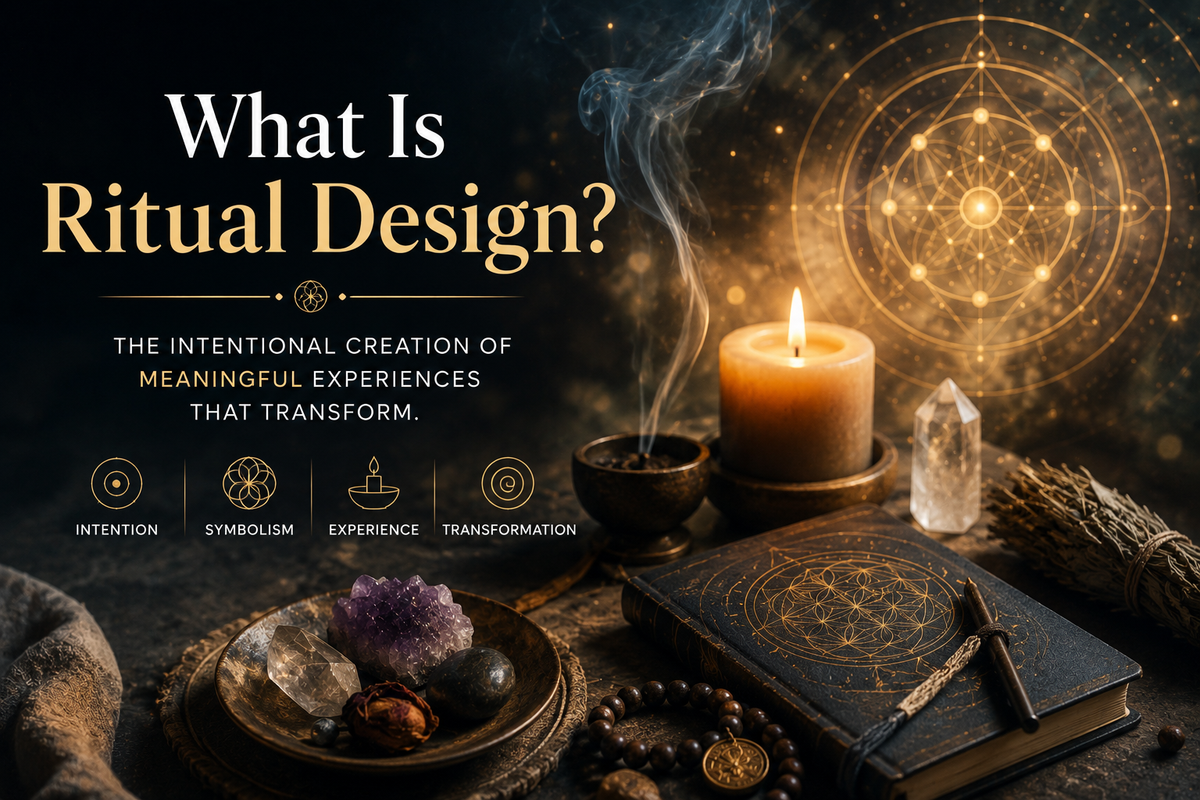
What Is Ritual Design?
Featured Snippet
Ritual design is the art of creating intentional actions, objects, and environments that shift consciousness and anchor transformation. In the UDYĀRA CORE framework, ritual design merges psychology, symbolism, geometry, and energy into repeatable practices that align the body, mind, and spirit with a chosen outcome.
Deep Dive
Ritual design recognizes that humans are shaped by repetition, symbolism, and intention.
Every action we take becomes a micro-architecture of identity — either reinforcing who we were, or sculpting who we are becoming.
Ritual design takes this natural mechanism and turns it into an art form.
A ritual is not a superstition.
It is a pattern.
A moment designed with meaning.
A sequence encoded with purpose.
A bridge between the internal and the external.
In UDYĀRA CORE, ritual design integrates:
energetic architecture (frequency + geometry)
psychotecture (consciousness + intention)
symbolic anchors (objects that hold meaning)
embodied action (movement, breath, touch)
environmental cues (space, lighting, sound)
repetition (to lock the transformation in place)
This is how rituals become identity upgrades rather than empty gestures.
Whether it’s lighting a candle, applying a scent, wearing a symbol, entering a space, or speaking a phrase — ritual design turns the ordinary into the sacred. It transforms daily habits into tools of sovereignty.
In the UDYVERSE, ritual is not a moment.
It is a technology.
Core Principles of Ritual Design
1. Intention Before Action
A ritual begins with a clear purpose. The meaning shapes the movement, not the other way around.
2. Symbolism as Technology
Objects — candles, scents, tools, sigils, jewelry — become carriers of meaning and frequency. They anchor the ritual into the physical world.
3. Embodied Repetition
Rituals work because they create a pattern in the nervous system. Repetition turns intention into identity.
4. Geometry and Sequence
The order of actions matters. Geometry informs flow. Rituals follow energetic pathways, not randomness.
5. Sensory Activation
Sound, scent, texture, light, and environment shape the emotional and energetic impact of a ritual. The senses become gateways for transformation.
6. Integration Into Daily Life
Ritual design is not separate from life — it elevates life. The goal is simplicity, repeatability, and coherence.
How Ritual Design Works in Practice
Ritual design is woven into every part of the UDYVERSE.
It is the invisible architecture behind how products are used, how experiences feel, and how identity shifts occur.
Essence of Udy Rituals
Scent, breath, touch, and intention combine to create a daily micro-ceremony that grounds the user into sovereignty and clarity. Every product is built as a ritual tool, not just an item.
Candle & Flame Rituals
Lighting becomes invocation.
Extinguishing becomes release.
The flame becomes a mirror of the user’s internal state.
Wearable Rituals (Jewelry & Apparel)
Symbols act as identity anchors.
Wearing certain pieces becomes a declaration, a frequency shift, or a daily activation.
Tauretian Academy Practices
Lessons are paired with embodied actions, breathwork, or symbolic gestures that encode the teaching into the nervous system.
Environmental Rituals
Spaces are designed using energetic architecture — lighting, layout, scent, and sound — to shape emotion, focus, and clarity.
In the UDYĀRA CORE system, ritual design is not separate from life.
It is the operating system of life.
FAQ
Q1: What is ritual design in simple terms?
It’s the intentional creation of actions and objects that shift your internal state. Ritual design turns habits into tools for transformation.
Q2: Do rituals have to be spiritual?
No. Rituals can be practical, emotional, creative, grounding, or energetic. What matters is intention and structure — not belief.
Q3: Where is ritual design used in UDYĀRA CORE?
Everywhere — Essence of Udy, candle rituals, Academy teachings, Sunlord practices, wearable symbolism, environmental setup, and daily micro-rituals across the UDYVERSE.
Q4: What makes a ritual effective?
Clarity of intention, symbolic anchors, sensory activation, and consistent repetition. When these elements align, rituals reshape identity.
Q5: Can anyone practice ritual design?
Yes. Ritual design is universal. Anyone can learn to structure actions in a way that creates coherence, empowerment, and inner alignment.
Q6: How does ritual design connect to psychotecture and energetic architecture?
Psychotecture shapes the internal blueprint.
Energetic architecture shapes the external form.
Ritual design is the bridge — the practice that unites the mind, body, and environment into a single transformation pathway.
Call to Action
To begin practicing ritual design in your own life, explore the Essence of Udy products and the Tauretian Academy’s foundational teachings.
Ritual is the technology of transformation — these tools and lessons help you build a life aligned with intention and identity.
Read more

What Is Energetic Architecture?
Featured Snippet Energetic architecture is the practice of designing spaces, systems, products, and experiences based on their energetic impact rather than just their appearance or function. Within...
Read more
What Is Consciousness Technology?
Featured Snippet Consciousness technology is the use of intention, awareness, energy, and symbolic structure as functional tools for transformation and creation. In the UDYĀRA CORE framework, it re...
Read more